

Visual notes are not just attractive or “cute” or fun to look at: research supports the effectiveness of creating and studying visual notes. Visual notes are effective for two main reasons. First, with visual notes, you are typically capturing key points and highlights, not every statement, reference, or spoken word. Second, reviewing notes minimizes the forgetting curve.
EASIER MEMORIZATION
A key area where visual notes are effective is enhancing recall of content. John Wittman, a professor at California State University, suggested the forgetting curve can be prevented by taking notes.17 Memory muscles are strengthened further when you add visual elements. Simple drawings improve memorability.
A series of studies showed even a drawing completed in 4 seconds results in greater recall for a list than simply writing out the words or viewing pictures of objects.

Our brains are better at visual processing, so notes you draw connect with your brain better than words or images you look at (drawing at any level of skill is better).
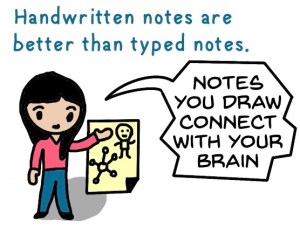
In an article titled “The surprisingly powerful influence of drawing on memory,” the authors concluded drawing dramatically improves the ability to memorize. Gains in memory performance occurred in different settings, tasks, and groups. Drawing is a solid strategy to encode content in your memory.
IMPROVED COGNITIVE SKILLS
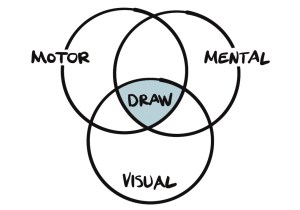
As the drawing in Chapter 1 of the character with oversized ears holding a pencil reminded us, auditory and visual abilities are stronger when working together. As you listen to the presenter, kinesthetically respond by moving your pen, pencil, or stylus, and look at your visual notes, your brain will better encode the content into your memory. These activities together promote active learning.
As information is encoded into your brain, your mind creates new relationships across knowledge areas. As your brain stays active, your ability to comprehend new material and recognize how content is organized will improve.
CREATIVITY ENHANCES YOUR BRAIN
Visual note-taking engages multiple senses, making the process more dynamic and enjoyable. As with any skill, the more you practice and apply these techniques, the more your creative toolbox expands—enhancing your design, layout, and drawing abilities.
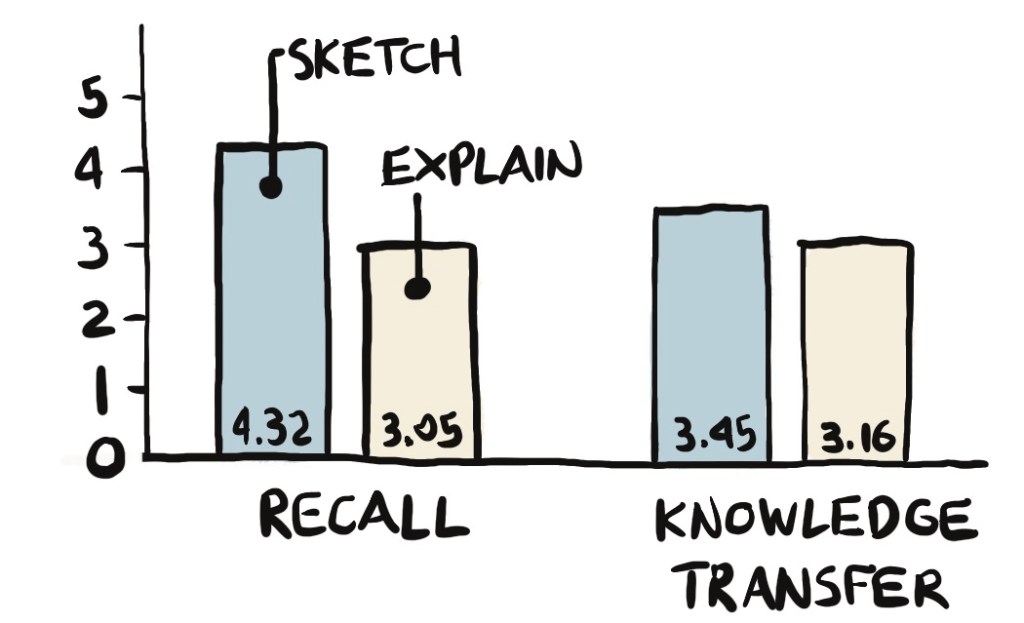
Researchers in Germany asked seventh graders to either sketch or provide a written explanation of the greenhouse effect. The sketch group outperformed the written explanation group on both recall of content and in the ability to apply information (knowledge transfer). The authors of the study instructed students not to worry about the artistic quality of their drawings.
In Thinking and Learning Through Drawing, author Gill Hope dives into how drawing can be a powerful tool for children in the classroom—not just for art, but for thinking and learning for all subjects. Drawing isn’t just about making pictures. It’s a way for children to explore ideas, express emotions, and better understand concepts. Whether they’re sketching to solve a problem, explain a thought, or just play around with ideas, drawing helps bridge the gap between what they’re learning and how they make sense of it.
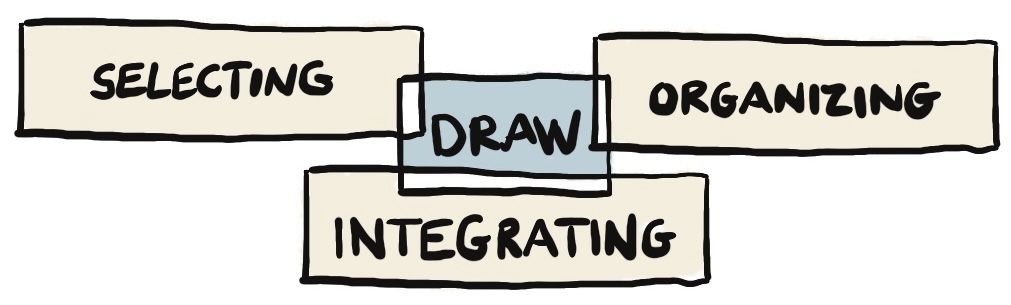
In their article “Drawing boundary conditions for learning by drawing,” Logan Fiorella and Qian Zhang reviewed research on drawing and suggested a roadmap for implementation. Drawing brings together the processes of selecting, organizing, and integrating content.
Look At My Notes
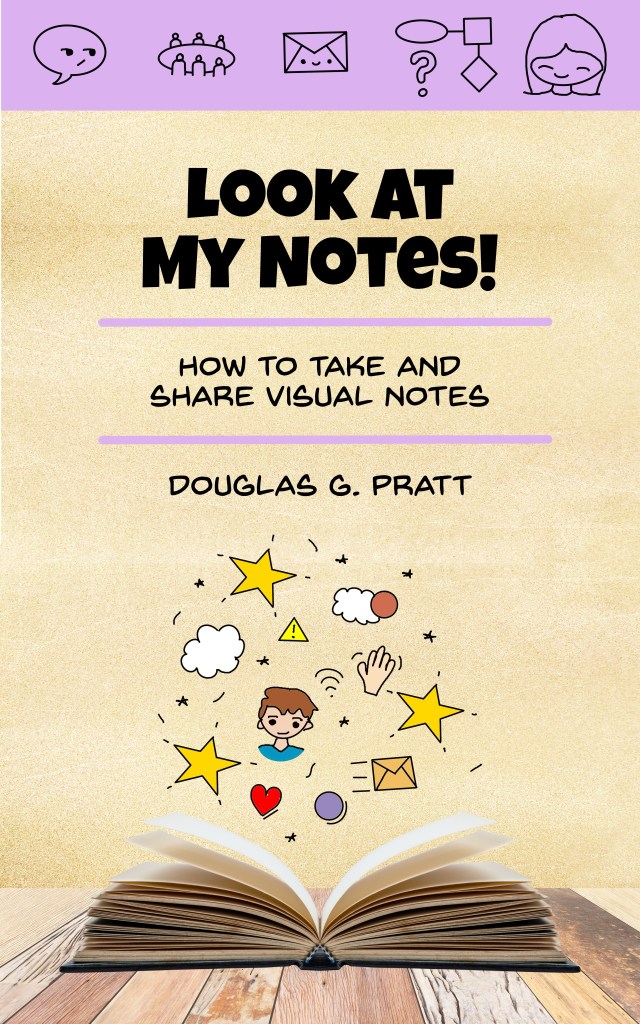
This post is from Look At My Notes! How to take and share visual notes. It is available at Amazon.com.
Visual notes consist of text and graphical elements arranged to enhance learning. Because emphasizing content visually makes it memorable, visual notes are ideal for learning, training, and handouts.
In Look At My Notes you will learn (1) how to take and share visual notes with others, (2) why visual notes are effective, and (3) what to include in your visual notes.
 Notes For Learning