

“Denise’s presentation yesterday was fantastic,” I said, sitting at our office’s conference room table.
My co-worker Jeff responded, “Cool. What did she talk about?”
After Denise’s presentation, I remembered thinking just what I told Jeff—it was a fantastic presentation, well planned and excellently delivered.
But when I searched my memory to share any key points with Jeff, nothing was there! I couldn’t recall the presentation’s points or the key takeaway.
“I actually forgot,” I told Jeff.
As I pondered the presentation a while longer, I remembered the stories Denise included. I worked backward to the points Denise had illustrated with each story. I shared these with Jeff.
I realized I needed a better way to recall information, but I’m not the only one struggling with memory retention. Most attendees at presentations, talks, sermons, or keynotes can’t recall the crucial details later in the day, let alone the next day (like me) or even further out.
What were those words again?
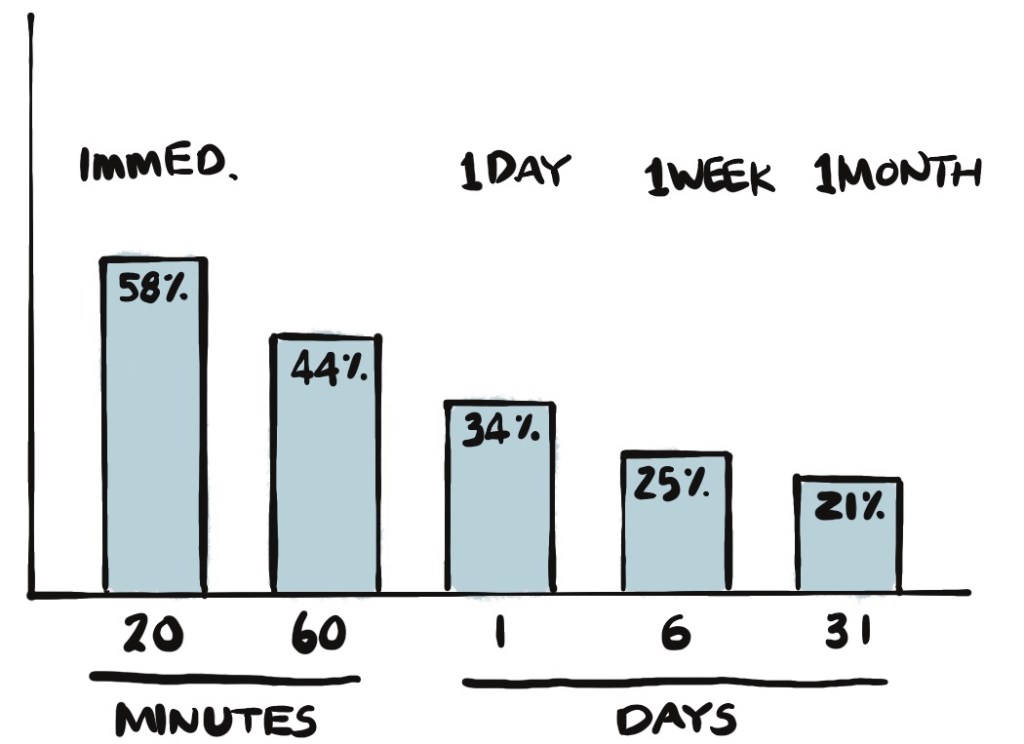
Hermann Ebbinghaus wondered about his own memory back in the 1880s. He devised a test for himself using made-up words (like dal, fum, ged). He studied his list of nonsense words for a specified period, set the word list aside, waited 20 minutes, and then wrote down as many words as he could recall. He tried to recall the word list after 60 minutes, then the next day, 6 days later, and after 31 days.
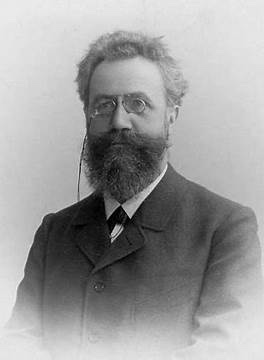
Ebbinghaus probably couldn’t imagine his name would be forever enshrined in the study of psychology as the “Ebbinghaus Curve” or the “forgetting curve.” As the chart below shows, the information we can recall drops precipitously even after just a few minutes. We tend to forget content quickly.
Breaking the forgetting curve
Fortunately, we typically don’t need to remember nonsense words. We have plenty of real words, concepts, and processes to track daily. Remembering is easier if content has meaning and you’re paying attention when you receive the content.
As I noted in my own experience above, when content is associated with something, it is more likely to be remembered. Stories, images, emotional experiences, and unique statistics help support memory by forming connections across different concepts.
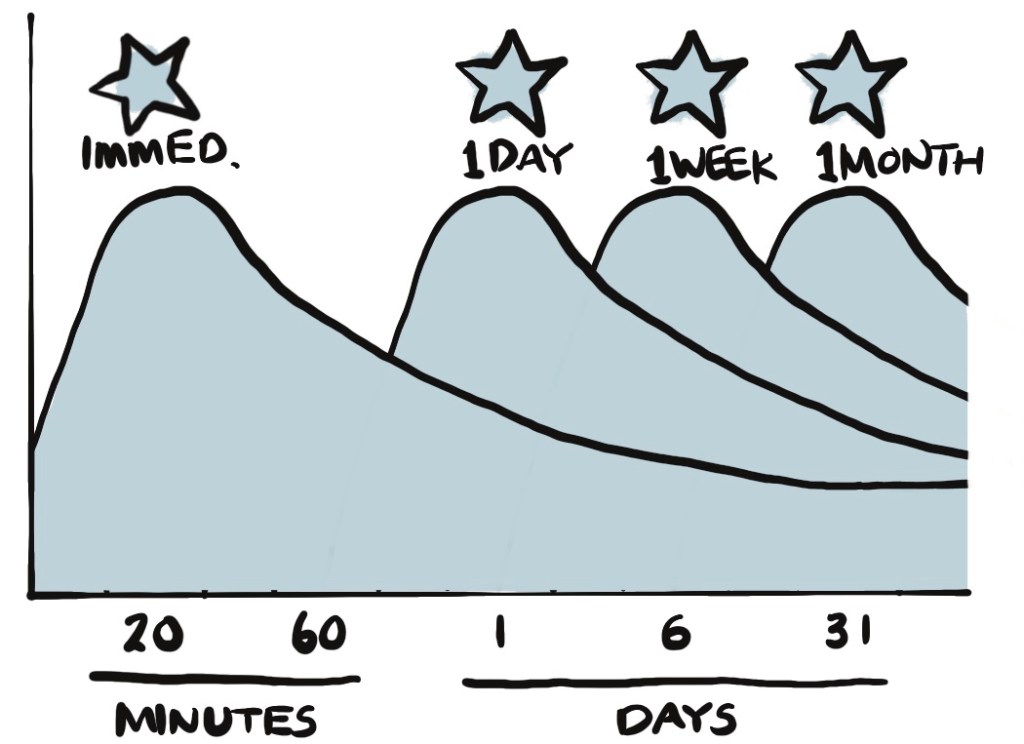
Another way to enhance your memory retention is through regular review of the content of your notes. While it’s natural for individuals to forget a significant portion of what they’ve learned shortly after an experience, simple techniques can be employed to slow down this process. By reviewing material repeatedly, you not only retain more information but also stabilize your forgetting curve at a higher level. However, if memory is unsupported, retention drops quickly.
Look At My Notes
This post is from Look At My Notes! How to take and share visual notes. It is available at Amazon.com.
Visual notes consist of text and graphical elements arranged to enhance learning. Because emphasizing content visually makes it memorable, visual notes are ideal for learning, training, and handouts.
In Look At My Notes you will learn (1) how to take and share visual notes with others, (2) why visual notes are effective, and (3) what to include in your visual notes.
 Notes For Learning